
Lesson 4: Sacred Music of the Early Middle Ages ~ Guido of Arezzo and Guidonian Hand
Lesson 4: Sacred Music of the Early Middle Ages ~ Guido of Arezzo and Guidonian Hand
Guido of Arezzo:
Guido of Arezzo was an 11th century monk who created a form of musical notation. He used a set of syllables to help singers sight sing music (read the correct pitches at first sight). The syllable are called "solfege":
ut, re, mi, fa, sol, la
The singers would know that between mi and fa is a half step; whereas the other steps are whole steps. This method of sight singing has been adjusted slightly but is still used today with the solfege syllables do, re, mi, fa, so, la, ti, do.
Even though the next video is an advertisement encouraging the sale of a full version of the interactive CD, it still gives some background about Guido in a fun way.
See a modern version of using the solfege system for learning to sing in the musical The Sound of Music:
The “Guidonian Hand” (possibly not invented by Guido) was a mnemonic device used for locating the pitches and patterns of whole and half steps. See how a person points to different areas of his hand to represent different pitches:
See an example of the Guidonian hand here:
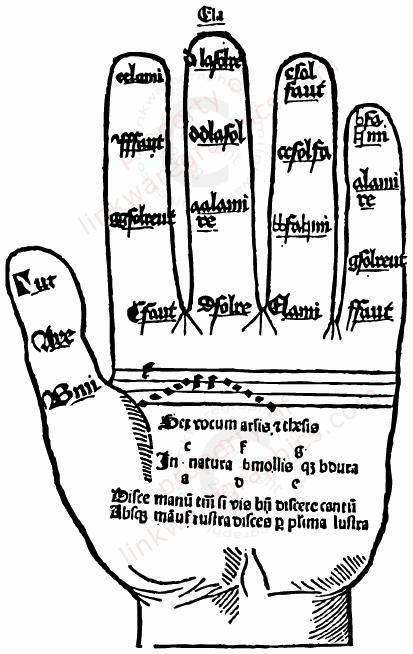
(This graphic is courtesy of http://linkwaregraphics.com/music/, site is no longer available.)
Do This:
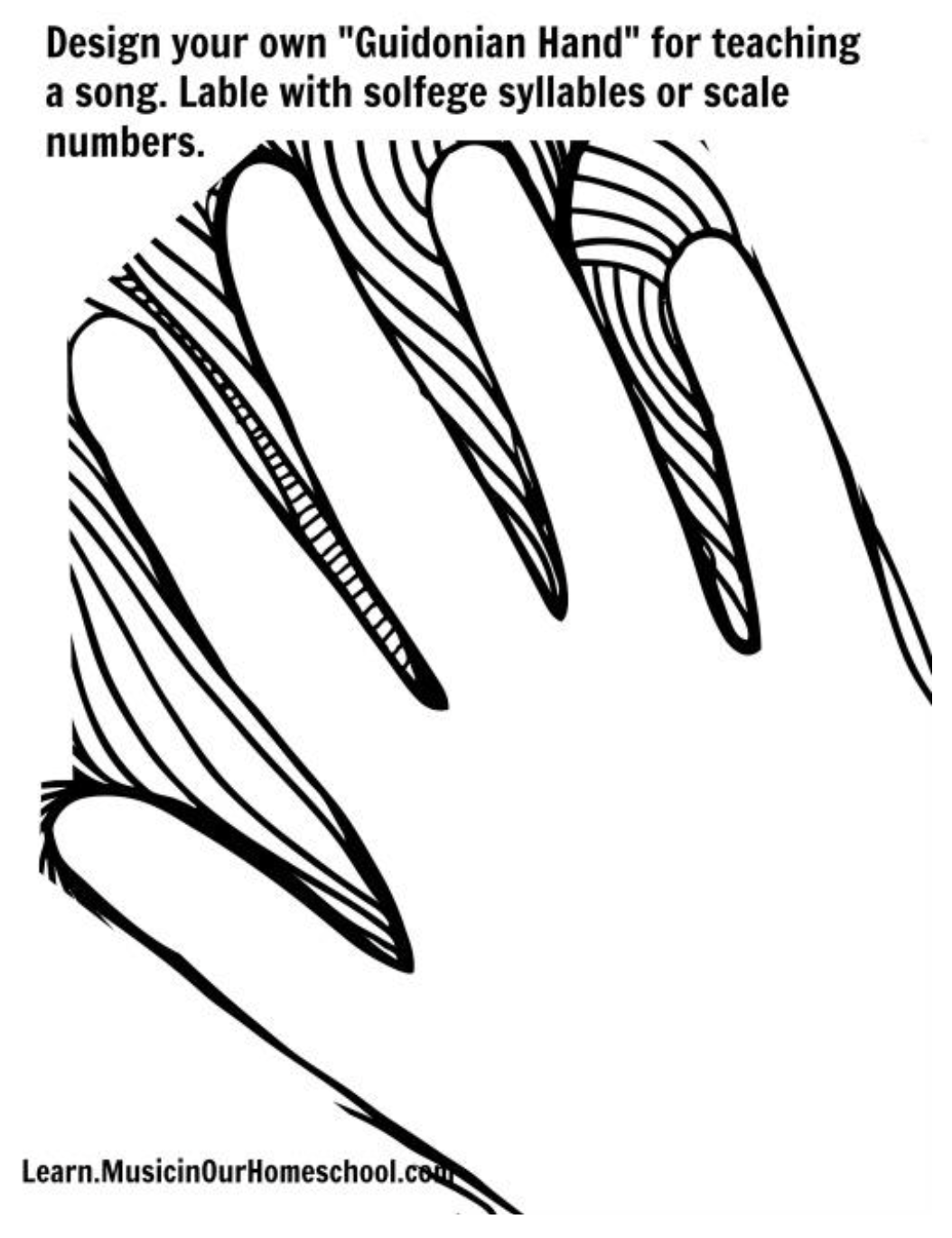
Take a few minutes to design your own "Guidonian Hand" for teaching singing. Label the blank hand outline attached below however you'd like-- with solfege syllables, music note names, or scale tone numbers. Try to teach someone to sing a song by pointing to your hand design. You can even write it on your own hand and teach them that way!
0 comments